Where Equipment Strategy Starts Affecting Production Planning

Equipment strategy becomes increasingly important once geometry, production volume, tooling timing, and downstream operations begin shaping the manufacturing path.

This guide focuses on how machine selection, tooling coordination, production planning, and process structure affect long-term manufacturing stability.
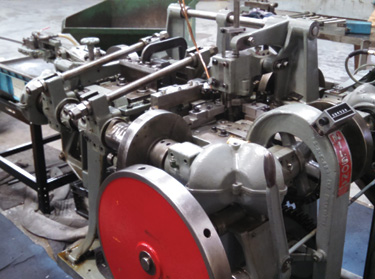
Four-slide and press equipment supporting precision metal component production

Where Equipment Decisions Usually Enter The Program

Equipment review often begins once geometry, material thickness, feature progression, and production requirements begin affecting tooling practicality and manufacturing continuity.

At this stage, the program may require coordination around process structure, machine capability, prototype timing, inspection planning, and long-term production support.

  • Flat blanking
  • Piercing
  • Coining
  • Vertical forming
  • Heavier-gauge forming operations
  • Additional tonnage requirements

Questions That Usually Need To Be Clarified Before Production Commitment

Production equipment used for forming and stamping operations

As manufacturing programs develop, the equipment discussion usually shifts from broad process selection into more specific questions involving tooling access, tonnage requirements, geometry stability, downstream handling, and production scalability.

The manufacturing path may involve combined four-slide and press operations depending on how the geometry and production requirements evolve.

  • Four-Slide Forming Applications
  • Press Operations & Added Tonnage
  • Prototype Through Production Support
  • Material & Geometry Considerations
  • Inspection & Quality Controls

Equipment & Production Review Topics

Four-slide equipment is commonly used when compact formed geometry, repeatable bend progression, spring-like behavior, or controlled multi-directional forming improve manufacturability and production consistency.

The process is typically reviewed around geometry practicality and long-run repeatability rather than geometry alone.

Press systems may support blanking, piercing, coining, heavier-gauge forming, or mixed-geometry operations requiring different tooling access or additional tonnage.

Equipment strategy may involve multiple manufacturing approaches working together within the same production path.

Machine configurations, tooling timing, inspection planning, and production coordination may support prototype development, bridge production, launch timing, and repeat long-term manufacturing.

The goal is maintaining stable production continuity as the program matures.

Common Questions About Equipment & Production Support

What types of parts are commonly produced on four-slide equipment?

Four-slide systems are commonly used for clips, retainers, brackets, electrical contacts, wire forms, spring features, and other precision formed metal components with multiple bends or compact geometry.

When are press operations used instead of four-slide forming?

Press operations may be used when vertical forming, flat blanking, piercing, heavier material sections, or additional tonnage requirements make conventional press equipment more suitable for the application.

Can four-slide and press operations be combined?

Yes. Depending on the application, manufacturing programs may integrate multiple forming and stamping operations to support the required geometry and production process.