Production-Ready Assemblies & Integrated Manufacturing Support
Four-Slide Technology supports assemblies and value-added operations for clips, brackets, wire forms, stampings, routing hardware, and integrated metal component programs.
Programs may involve welding, hardware insertion, tapping, fastening, fixture-based assembly, packaging coordination, line-ready delivery, and downstream production integration.
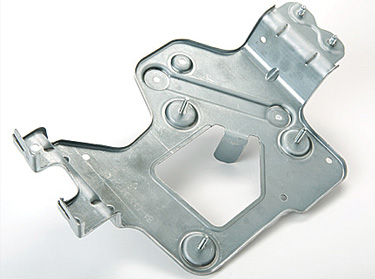
Assembly Support Built Around Production Flow
Assemblies and value-added operations are commonly used when multiple formed parts, fastening steps, or downstream production operations can be integrated upstream before final installation.
The objective is improving assembly consistency, reducing handling complexity, simplifying supplier coordination, and supporting repeatable production workflows.
- Welded subassemblies
- Hardware-integrated brackets
- Tapped components
- Fixture-based assemblies
- Routing assemblies
- Mounting systems
- Line-ready component kits
- Sequenced production hardware
Key Integration, Joining & Production Variables
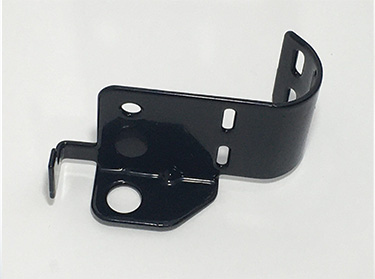
Successful assembly programs depend on much more than simply combining multiple parts together. Joining method, fixture stability, alignment control, weld sequencing, packaging flow, inspection planning, and downstream handling all influence long-term production performance.
Programs may also involve customer-specific packaging, line-side delivery, kitting, sequencing, traceability, or assembly-readiness requirements.
Assembly Review Priorities
Programs may involve resistance welding, tapping, staking, riveting, threaded hardware insertion, fastening, and related joining methods selected around assembly performance and downstream manufacturing requirements.
Joining strategy is typically reviewed together with tooling, fixturing, inspection, and production-flow considerations.
Stable fixturing and alignment control are often central to repeatable assemblies, especially where multiple formed parts, mounting relationships, or hardware interfaces affect installation behavior.
Fixture planning may affect production repeatability, assembly speed, inspection stability, and downstream handling.
Assemblies may be grouped, packaged, kitted, labeled, or sequenced around customer workflows when line-ready delivery and controlled handling matter.
Packaging strategy often affects downstream production efficiency and manufacturing continuity.
Inspection planning, traceability requirements, weld validation, dimensional verification, torque checks, and customer-specific documentation may all support the assembly workflow.
Quality controls are intended to support repeatable assembly performance and stable long-term production.
Sample builds, fixture validation, pre-production review, and assembly evaluation may help confirm joining performance, manufacturability, and downstream installation behavior before production release.
For deeper integration and quote-review context, see the Applications & Design Considerations guide.
Common Questions About Assemblies & Value Added Operations
Assembly support is commonly used when multiple components, fastening operations, or production steps can be integrated upstream to reduce downstream handling and simplify final assembly.
Yes. Depending on the application, programs may support customer-specific packaging, kitting, sequencing, labeling, and line-ready delivery requirements.
Drawings, BOM relationships, joining requirements, hardware specifications, annual volume, packaging expectations, and downstream assembly requirements all help support manufacturability review.
In many applications, integrating welding, fastening, hardware insertion, packaging, or subassembly work upstream may help reduce internal handling, simplify production flow, and improve assembly consistency.
Assembly Support Guides
Need Production-Ready Assemblies Or Integrated Manufacturing Support?
Share drawings, BOM details, joining requirements, packaging expectations, or production requirements to begin a manufacturing and engineering review with our team.