Precision Flat Stampings & Formed Metal Components For Production Assemblies

Four-Slide Technology manufactures precision flat stampings and formed metal parts used throughout transportation, industrial, electrical, medical-device, energy, and equipment applications.

Programs may involve pierced features, tabs, embosses, formed edges, bends, shielding geometry, mounting interfaces, routing features, or assembly-specific formed conditions tied to repeatable installation requirements.
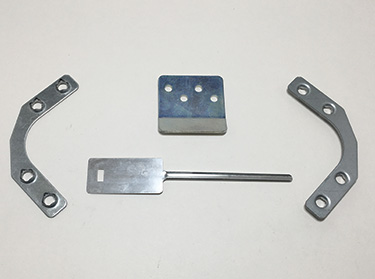
Flat metal stampings and formed parts produced by Four-Slide Technology, Inc.

Flat Stampings Built Around Geometry & Assembly Interaction

Flat stampings and formed parts are commonly used where assemblies require repeatable geometry, mounting features, shielding, reinforcement, retention, alignment, or controlled interface conditions.

The objective is maintaining dimensional consistency, installation repeatability, assembly efficiency, and long-term production stability.

  • Mounting tabs
  • Reinforcement brackets
  • Shielding components
  • Connector interfaces
  • Retention features
  • Formed supports
  • Routing hardware
  • Covers & shields
  • Assembly-positioning features

Key Geometry, Tolerance & Production Variables
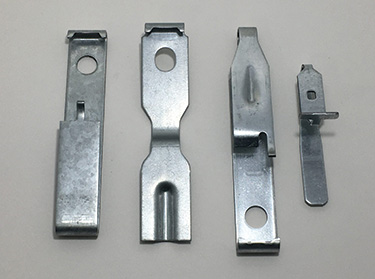
Detail view of precision formed stamping with holes and bends

Stamped-part performance is often influenced by much more than the flat profile alone. Pierced features, bends, embosses, tabs, slots, edge condition, burr direction, formed geometry, material thickness, and downstream assembly interaction all affect long-term part behavior.

Programs may also involve shielding requirements, connector interfaces, routing support, secondary forming, assembly integration, or customer-specific handling expectations.

Stamping Review Priorities

Programs may involve carbon steel, stainless steel, spring materials, and specialty alloys selected around strength, stiffness, corrosion resistance, conductivity, and forming feasibility.

Material selection often affects tooling direction, geometry stability, manufacturability, and long-term production performance.

Part geometry may include holes, slots, tabs, embosses, formed edges, bends, and interface features selected around installation fit, alignment accuracy, and assembly interaction.

Feature geometry often affects tooling practicality, burr direction, and downstream installation behavior.

Stamped parts may move into secondary forming, welding, hardware insertion, fastening, or integration into larger assemblies when that improves manufacturing flow or downstream installation efficiency.

Assembly integration often affects fixture planning, inspection requirements, and packaging coordination.

Inspection planning, packaging strategy, labeling, handling protection, and delivery requirements may be coordinated around dimensional stability, line-side presentation, and customer-specific production workflows.

Packaging strategy often affects downstream handling efficiency and manufacturing continuity.

Prototype samples and validation work may help confirm feature feasibility, geometry control, material response, manufacturability, and tooling direction before long-run production commitments are finalized.

For deeper geometry and application-review context, see the Applications & Design Considerations guide.

Common Questions About Flat Stampings & Formed Parts

What applications commonly use flat stampings and formed parts?

Flat stampings and formed metal parts are commonly used for mounting, shielding, reinforcement, retention, alignment, routing, and assembly support across transportation, industrial, electrical, and equipment applications.

Can flat parts include formed features or secondary operations?

Yes. Depending on the application, programs may incorporate bends, embosses, tabs, secondary forming, welding, hardware insertion, or assembly integration.

What information is typically helpful during quote review?

Drawings, feature tolerances, material and thickness requirements, annual volume, finish specifications, and assembly requirements all help support manufacturability review.

Can manufacturability feedback happen before the design is finalized?

Yes. Engineering and manufacturability review may help evaluate geometry, tooling strategy, feature feasibility, production approach, and assembly interaction before tooling is finalized.

Need Flat Stampings Or Formed Components For Your Application?

Share drawings, specifications, material requirements, or production details to begin a manufacturing and engineering review with our team.