Equipment & Production Systems For Formed Metal Component Manufacturing

Four-Slide Technology utilizes four-slide equipment, press systems, and supporting production equipment to manufacture clips, clamps, brackets, wire forms, flat stampings, and custom formed metal components.

Equipment selection is driven by geometry, material behavior, production volume, tooling practicality, and long-term manufacturing requirements rather than relying on a single forming approach.
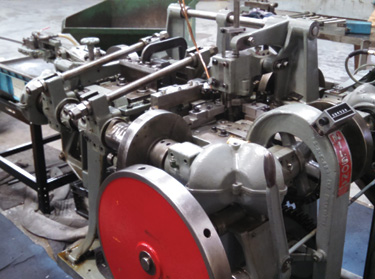
Four-slide and press equipment supporting precision metal component production

Equipment Matched To Production Requirements

Different geometries and production requirements often require different equipment paths. Four-slide systems are commonly used for compact formed parts with multiple bends, wrapped features, spring geometry, or controlled forming from several directions.

Press operations may support blanking, piercing, coining, vertical forming, heavier-gauge material, or secondary operations that require additional tonnage or different tooling access.

  • Flat blanking
  • Piercing
  • Coining
  • Vertical forming
  • Heavier-gauge forming operations
  • Additional tonnage requirements

What Equipment Questions Usually Matter Early

Production equipment used for forming and stamping operations

Equipment review usually focuses on whether the geometry, material thickness, bend progression, production volume, and downstream handling requirements align with the proposed manufacturing path.

Programs may involve combined four-slide and press operations when different features require different forming approaches to support repeatable production.

Equipment & Production Review Priorities

Four-slide systems are commonly used for clips, retainers, electrical contacts, wire forms, brackets, routing hardware, and compact formed components requiring controlled multi-directional forming.

The process is typically reviewed when geometry complexity and repeatable production both matter.

Press operations may support flat blanking, piercing, coining, vertical forming, heavier-gauge material, or mixed-geometry operations requiring additional tonnage or different tooling access.

The manufacturing path may combine multiple forming methods depending on the application.

Equipment planning may support prototype development, bridge production, service parts, launch timing, and long-term manufacturing continuity depending on the program requirements.

For broader production-planning guidance, see the Program Support Guide.

Geometry, material thickness, springback behavior, tolerance expectations, and downstream assembly interaction all influence equipment selection and tooling strategy.

These factors help determine whether the manufacturing path remains stable and repeatable at production scale.

Inspection planning, process checks, capability studies, tooling integration, and control-plan support help maintain repeatable production performance.

Quality controls are intended to support stable manufacturing continuity throughout the life of the program.

Common Questions About Four-Slide & Press Equipment

What types of parts are commonly produced on four-slide equipment?

Four-slide systems are commonly used for clips, retainers, brackets, electrical contacts, wire forms, spring features, and other precision formed metal components with multiple bends or compact geometry.

When are press operations used instead of four-slide forming?

Press operations may be used when vertical forming, flat blanking, piercing, heavier material sections, or additional tonnage requirements make conventional press equipment more suitable for the application.

Can four-slide and press operations be combined?

Yes. Depending on the application, manufacturing programs may integrate multiple forming and stamping operations to support the required geometry and production process.

Can equipment support both prototype and production programs?

Yes. Equipment configurations and production planning may support prototype development, bridge production, service parts, and long-term manufacturing programs.

Equipment Support Guides

Review Your Production Requirements With Our Team

Send drawings, specifications, or application details to discuss whether four-slide forming, press operations, or a combined manufacturing approach is best suited for your component.