Material, Spring & Finish Decisions That Affect Wire Form Performance

Material, temper, finish, and working-range decisions often affect spring recovery, fatigue resistance, contact pressure, corrosion protection, conductivity, and long-term wire-form stability throughout the life of the assembly.

This guide focuses on the material and performance conditions that commonly influence wire-form manufacturability and long-term behavior.
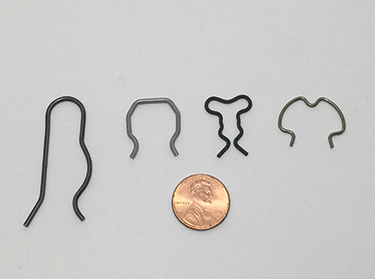
Wire forms and specialty wire components produced by Four-Slide Technology

What Usually Drives Material & Spring Selection

Material selection is often tied to spring force, deflection range, fatigue expectations, retained-medium interaction, conductivity requirements, corrosion exposure, and long-term performance stability.

The review process typically balances manufacturability, repeatable spring behavior, coating compatibility, environmental exposure, and downstream assembly interaction.

  • required spring force
  • deflection range
  • contact or latch function
  • corrosion exposure
  • conductivity expectations
  • long-term fatigue resistance

Where Spring Behavior & Surface Conditions Matter Most

Wire forms and specialty wire components produced by Four-Slide Technology

Spring-like wire forms are often sensitive to both material temper and geometric working range. If the component must deflect repeatedly, hold contact pressure, or recover after installation, the review process needs to evaluate both the geometry and the actual service conditions.

Finish and coating selection may also affect corrosion resistance, conductivity, abrasion interaction, fatigue behavior, and long-term performance.

  • working deflection range
  • installed position
  • recovery after load
  • fatigue risk
  • contact pressure stability

Questions That Usually Affect Wire Form Material Recommendation

Some wire-form programs depend on controlled spring recovery and repeatable force after installation. Material temper, thickness, geometry, and working range all influence long-term spring behavior and fatigue resistance.

Spring-performance review often affects tooling direction and manufacturability.

Environmental exposure may quickly change the material and finish recommendation. Moisture, corrosion exposure, chemicals, fluids, heat, and outdoor service conditions may justify stainless materials or more protective surface treatments.

Corrosion review is typically connected to both long-term durability and retained-medium interaction.

Adjacent components, retained media, grounding requirements, abrasion concerns, conductivity expectations, or galvanic interaction may all influence which material and finish combination remains appropriate.

Compatibility review helps support both installed performance and long-term assembly durability.

Common Questions About Wire Form Materials & Spring Behavior

Can spring-force expectations be reviewed without a finished print?

Yes. Even an early concept can be reviewed if the intended movement, retained function, and performance concern are described clearly.

Are stainless and spring materials both used for wire forms?

Yes. Material selection depends on force behavior, corrosion exposure, conductivity, cost, and the long-term duty cycle of the component.

What helps the team evaluate spring behavior faster?

A print or concept, expected deflection, installed position, contact target, cycle expectations, and known service environment all make review more efficient.

Need A Direct Product Review?

If the spring behavior or retained function is already known, send the geometry and performance expectations for direct review.