Four-Slide Process Fit Guide
- Home
- Capabilities
- Four-Slide Stamping
- Process Fit Guide
When Four-Slide Is The Right Manufacturing Fit
Four-slide process fit is usually determined by the relationship between part geometry, material behavior, tooling access, production volume, and downstream assembly requirements.
This guide helps screen whether a component is likely to belong in a four-slide conversation before tooling, quoting, or launch planning moves further.
Signs A Part May Fit Four-Slide Manufacturing
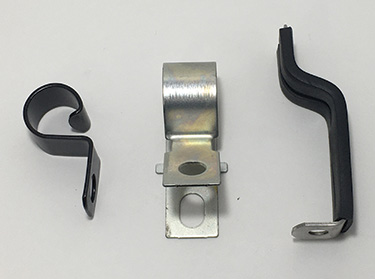
Four-slide manufacturing is often a strong candidate when a part requires multiple bends, compact formed geometry, spring-like behavior, wrapped features, or repeatable forming from more than one direction.
The process is especially worth reviewing when the part would otherwise require multiple forming steps, added handling, or secondary operations that could potentially be reduced through a more integrated forming approach.
- multiple bends in limited space
- formed retention or spring features
- compact part geometry
- repeatable high-volume production
- tight packaging constraints
- reduced part count goals
What Separates A Strong Fit From A Borderline Fit

A part may look like a four-slide candidate at first, but the final process decision depends on bend progression, material response, feature spacing, tolerance expectations, production volume, and how the part will be handled after forming.
Borderline applications often need closer review when material thickness, springback, plating requirements, secondary operations, or tooling access could affect repeatability.
- bend progression practicality
- material springback
- feature spacing and access
- part handling through production
- volume and tooling economics
Process-Fit Review Topics
Geometry review considers bend sequence, formed-feature access, wrapped areas, leg lengths, and whether the part can be formed repeatably through a practical tooling path.
The goal is to confirm that the geometry supports stable production rather than simply identifying that the part has multiple bends.
Material behavior can affect forming force, springback, fatigue performance, surface finish, and the ability to hold geometry after forming.
Material family, thickness, temper, plating, and finish requirements should be reviewed early because they may affect both tooling strategy and production consistency.
Production volume matters, but volume alone does not determine whether four-slide is the right fit.
The strongest applications usually combine repeatable production demand with geometry that benefits from multi-directional forming, reduced handling, or fewer downstream operations.
Common Questions About Four-Slide Process Fit
Yes. A concept, preliminary model, or current revision can usually support an early process-fit discussion.
No. Volume matters, but the geometry, feature progression, material behavior, and downstream requirements still decide whether the process is truly appropriate.
A drawing or model, material assumptions, annual volume, and a short explanation of the part function usually provide enough context to start the review.